Monday, November 30, 2009
Focus on at-risk groups says HIV Activistss
Stacy-Ann Jarrett, executive director of Jamaica AIDS Support for Life (JASL), is calling for urgent attention to be given to HIV/AIDS at-risk groups regarding treatment prevention and care.
She says men who have sex with men (MSM), prostitutes, drug users and youths should be targeted, and the relevant assistance provided to them.
"The funding needs to go there, the activities need to go there, but because of lack of political will and fear, those who have been working in the field have not gone out as aggressively as the epidemic requires that they go out for these groups," said Jarrett.
She noted that Jamaica has further criminalised sex work in the most recent sexual offences bill, and no decision has been made in decriminalising buggery, and no media campaign has been made about anal sex, even though it is on the rise. Those facts, she says are causes for concern.
Young experimenters
"Young girls are engaged in anal sex to protect their virginity, and they don't have the information. We have young girls calling here (JASL) and asking since they cannot get pregnant from anal sex do they need a condom?" she said, adding that there was not enough dialogue to give the relevant information, especially to young people who experiment.
However, Roshane Reid, behaviour change communication (BCC) officer with the National HIV/STI programme at the Ministry of Health told The Gleaner that HIV prevalence in at-risk groups living with HIV, made individuals in that circle more vulnerable.
Reid explained that while poverty was tied to vulnerability, educational background was not a factor, as MSM become vulnerable because of the nature of the anus, and have a high prevalence level, of one in three.
She noted that one-to-one workshops have have been used to target MSM, commercial sex workers, drug users and youths. Reid told The Gleaner that issues such as lack of testing, multiple partnerships and stigma are causes for concern.
Anti-stigma campaign
In a bid to combat these issues, Reid said an anti-stigma campaign had been launched. Next year parenting, partner reduction, condom use for women and voluntary counselling and testing campaigns will also be launched.
Additionally, Reid said sometimes groups like sex workers cannot get legitimate jobs. Focussing on building skills, she says, can help to decrease the size of the group.
According to Reid there have been successes in this area but that has not brought about a domino effect for reasons particular to the industry.
"We have a few success stories, but those persons don't want to be out in the public," she said.
kimesha.walters@gleanerjm.com
She says men who have sex with men (MSM), prostitutes, drug users and youths should be targeted, and the relevant assistance provided to them.
"The funding needs to go there, the activities need to go there, but because of lack of political will and fear, those who have been working in the field have not gone out as aggressively as the epidemic requires that they go out for these groups," said Jarrett.
She noted that Jamaica has further criminalised sex work in the most recent sexual offences bill, and no decision has been made in decriminalising buggery, and no media campaign has been made about anal sex, even though it is on the rise. Those facts, she says are causes for concern.
Young experimenters
"Young girls are engaged in anal sex to protect their virginity, and they don't have the information. We have young girls calling here (JASL) and asking since they cannot get pregnant from anal sex do they need a condom?" she said, adding that there was not enough dialogue to give the relevant information, especially to young people who experiment.
However, Roshane Reid, behaviour change communication (BCC) officer with the National HIV/STI programme at the Ministry of Health told The Gleaner that HIV prevalence in at-risk groups living with HIV, made individuals in that circle more vulnerable.
Reid explained that while poverty was tied to vulnerability, educational background was not a factor, as MSM become vulnerable because of the nature of the anus, and have a high prevalence level, of one in three.
She noted that one-to-one workshops have have been used to target MSM, commercial sex workers, drug users and youths. Reid told The Gleaner that issues such as lack of testing, multiple partnerships and stigma are causes for concern.
Anti-stigma campaign
In a bid to combat these issues, Reid said an anti-stigma campaign had been launched. Next year parenting, partner reduction, condom use for women and voluntary counselling and testing campaigns will also be launched.
Additionally, Reid said sometimes groups like sex workers cannot get legitimate jobs. Focussing on building skills, she says, can help to decrease the size of the group.
According to Reid there have been successes in this area but that has not brought about a domino effect for reasons particular to the industry.
"We have a few success stories, but those persons don't want to be out in the public," she said.
kimesha.walters@gleanerjm.com
| Reactions: |
Religion and Civil Law (Observer Column)
Just a note it is good to see the various articles in the papers examing the issues in what seems are more level headed manner, forgive me if I have not been posting much lately please peruse the articles and comments as always are welcomed. Thanks.
HOWARD GREGORY
A recent lead story in one of our daily newspapers reported on a confrontation between the Roman Catholic Church and the State over matters of law, and was subtitled "Catholic priests, State clash over reporting of confessed crimes". The article quotes Monsignor Kenneth Richards, rector of the Roman Catholic Cathedral. It is suggested that the rules of the Church, known as Canon Law, do not allow for the disclosure of information shared in the confessional, even if this relates to the abuse of a child. He is further quoted as stating that the seal of the confessional stands supreme and cannot be superseded by any civil law.
While this disclosure by Monsignor Richards is bound to create a lot of stir and ruffle many feathers, based on the sensational way in which the article was written, he has certainly rendered a service to the wider society by opening up the discussion on religion, which up to this point was on a very superficial level and without any form of analysis. Certainly, there are those who, under the influence of secularism and modernity, want to advance the position that religion needs to be marginalised as a relic of superstition, ignorance, and of an age that is past, notwithstanding the fact that credible research lends no credence to such assertions. That the BBC could, in recent weeks, have had a debate as to whether the Roman Catholic Church has been a force for good in the world, and got diverse responses, is indicative, at least in part, of the negative view which some have of religion.
There has also been a united response in countries which have been identified in the past as part of Christendom to the passage of laws that seek to limit the role of religion in the public sphere and in the life of the nation. They even prescribe how to deal with issues which have been traditionally defined as matters of doctrine and practice within the life of the Church. One example of this is the way in which the issue of human sexuality is being legislated by governments. There is a move afoot in the United Kingdom to make it illegal for the Church to preach that homosexuality is wrong, by making the issue one of human rights, with the consequence for violation being prosecution. In some countries, same-sex unions have now been defined as marriage. This is true in Holland and South Africa, to name a few. In Holland where the clergy are paid by the state, those who refuse to carry out such marriages face a real problem. In South Africa, I am told, the law specifically exempts the Church from any compulsion to perform such marriages.
The issue of marriage brings me to the substance of Monsignor's statement on the Roman Catholic Church. For the Roman Catholic Church, and some other Christian traditions including my own, marriage as well as the confessional (spoken of today as the Sacrament of Reconciliation) are sacraments of the Church. Sacraments belong to the Church and are neither the right/entitlement of anyone nor come under the sphere of jurisdiction of the State. While Monsignor Richards was not providing the media with a lesson in catechesis, it would be good to understand what a sacrament is. "The sacraments are outward and visible signs of inward and spiritual grace, given by Christ as sure and certain means by which we receive that grace." In its simplest expression one can state that the confessional to which the Monsignor refers becomes the place and opportunity for one who has done wrong and is troubled to come in penitence and acknowledge openly, in a confidential relationship, the wrong that has been done and to seek to receive the grace of forgiveness and make reparation.
This is the point that is missed by many whose traditions do not include this sacrament as part of their discipline. The article misses this point altogether. The confessional is not an 'information bank' where persons come to deposit with the priest all the evils of his or her life. Rather it is the place where the penitents come to unburden themselves by acknowledging guilt and seek, through the grace imparted and affirmed, the strength to go and do the right and to make amends where necessary.
To paint a clearer, if not a bit offensive picture, the person coming to confess that he or she has, for example, committed a murder would not be advised by the priest to make sure that the body is properly hidden or buried, but would seek to explore the extent to which the person sees his or her actions as immoral, is disturbed of conscience, and would want to do what is necessary to relieve a troubled conscience and to be right with God. As the Monsignor indicated, this could mean that one seeks to have a long-term relationship with the penitent so that matters related to the consequences of his or her actions may be explored and be addressed. This could lead to a situation in which the priest becomes involved in the situation to the extent that he may be the one to accompany the penitent to the police by mutual consent.
While not directly related to the confessional, I found myself in a situation in recent times in which, while conducting a public service in church, a man came forward to the sanctuary and requested that the assisting parish priest accompany him to the police station because he had just stabbed a woman and she may have died. Put in the simplest form, one could say that the disturbance of conscience from his actions, and acknowledgement of the crime he committed, led him to seek out the religious figure with whom he could share that burden, even in a public setting.
What is probably most troubling for many, in the remarks of the ................ CONTINUE HERE
HOWARD GREGORY
A recent lead story in one of our daily newspapers reported on a confrontation between the Roman Catholic Church and the State over matters of law, and was subtitled "Catholic priests, State clash over reporting of confessed crimes". The article quotes Monsignor Kenneth Richards, rector of the Roman Catholic Cathedral. It is suggested that the rules of the Church, known as Canon Law, do not allow for the disclosure of information shared in the confessional, even if this relates to the abuse of a child. He is further quoted as stating that the seal of the confessional stands supreme and cannot be superseded by any civil law.
While this disclosure by Monsignor Richards is bound to create a lot of stir and ruffle many feathers, based on the sensational way in which the article was written, he has certainly rendered a service to the wider society by opening up the discussion on religion, which up to this point was on a very superficial level and without any form of analysis. Certainly, there are those who, under the influence of secularism and modernity, want to advance the position that religion needs to be marginalised as a relic of superstition, ignorance, and of an age that is past, notwithstanding the fact that credible research lends no credence to such assertions. That the BBC could, in recent weeks, have had a debate as to whether the Roman Catholic Church has been a force for good in the world, and got diverse responses, is indicative, at least in part, of the negative view which some have of religion.
There has also been a united response in countries which have been identified in the past as part of Christendom to the passage of laws that seek to limit the role of religion in the public sphere and in the life of the nation. They even prescribe how to deal with issues which have been traditionally defined as matters of doctrine and practice within the life of the Church. One example of this is the way in which the issue of human sexuality is being legislated by governments. There is a move afoot in the United Kingdom to make it illegal for the Church to preach that homosexuality is wrong, by making the issue one of human rights, with the consequence for violation being prosecution. In some countries, same-sex unions have now been defined as marriage. This is true in Holland and South Africa, to name a few. In Holland where the clergy are paid by the state, those who refuse to carry out such marriages face a real problem. In South Africa, I am told, the law specifically exempts the Church from any compulsion to perform such marriages.
The issue of marriage brings me to the substance of Monsignor's statement on the Roman Catholic Church. For the Roman Catholic Church, and some other Christian traditions including my own, marriage as well as the confessional (spoken of today as the Sacrament of Reconciliation) are sacraments of the Church. Sacraments belong to the Church and are neither the right/entitlement of anyone nor come under the sphere of jurisdiction of the State. While Monsignor Richards was not providing the media with a lesson in catechesis, it would be good to understand what a sacrament is. "The sacraments are outward and visible signs of inward and spiritual grace, given by Christ as sure and certain means by which we receive that grace." In its simplest expression one can state that the confessional to which the Monsignor refers becomes the place and opportunity for one who has done wrong and is troubled to come in penitence and acknowledge openly, in a confidential relationship, the wrong that has been done and to seek to receive the grace of forgiveness and make reparation.
This is the point that is missed by many whose traditions do not include this sacrament as part of their discipline. The article misses this point altogether. The confessional is not an 'information bank' where persons come to deposit with the priest all the evils of his or her life. Rather it is the place where the penitents come to unburden themselves by acknowledging guilt and seek, through the grace imparted and affirmed, the strength to go and do the right and to make amends where necessary.
To paint a clearer, if not a bit offensive picture, the person coming to confess that he or she has, for example, committed a murder would not be advised by the priest to make sure that the body is properly hidden or buried, but would seek to explore the extent to which the person sees his or her actions as immoral, is disturbed of conscience, and would want to do what is necessary to relieve a troubled conscience and to be right with God. As the Monsignor indicated, this could mean that one seeks to have a long-term relationship with the penitent so that matters related to the consequences of his or her actions may be explored and be addressed. This could lead to a situation in which the priest becomes involved in the situation to the extent that he may be the one to accompany the penitent to the police by mutual consent.
While not directly related to the confessional, I found myself in a situation in recent times in which, while conducting a public service in church, a man came forward to the sanctuary and requested that the assisting parish priest accompany him to the police station because he had just stabbed a woman and she may have died. Put in the simplest form, one could say that the disturbance of conscience from his actions, and acknowledgement of the crime he committed, led him to seek out the religious figure with whom he could share that burden, even in a public setting.
What is probably most troubling for many, in the remarks of the ................ CONTINUE HERE
| Reactions: |
Perverted ...... (Observer Letter)
Dear Editor,
As one of your writers said, Jamaica is a Christian country with Christian values. Homosexuality must never be accepted on our island. Homosexuality is a sick lifestyle. I see no reason why people all over the world are targeting Jamaica.
Jamaicans must be resolute on this issue. We must not allow boycotts and other forms of international pressure to make us adjust to this sinful and perverted act.
We have our children to think about.There is no future in accepting homosexuality. It must remain illegal in Jamaica.
V McKreith
mixhypnatist@hotmail.com
My two cents off the bat:
Firstly homosexuality is not legal in Jamaica, it is buggery which is also practiced by heterosexual couples as well. Homosexuality already exists whether the writer likes it or not and probably more so under the guise of Christianity with pastors and other clergy hiding behind the cloth to portrait a clean life so to speak when in fact they are just as bad as the folks they preach brimstone and fire on.
Grow up.
As one of your writers said, Jamaica is a Christian country with Christian values. Homosexuality must never be accepted on our island. Homosexuality is a sick lifestyle. I see no reason why people all over the world are targeting Jamaica.
Jamaicans must be resolute on this issue. We must not allow boycotts and other forms of international pressure to make us adjust to this sinful and perverted act.
We have our children to think about.There is no future in accepting homosexuality. It must remain illegal in Jamaica.
V McKreith
mixhypnatist@hotmail.com
My two cents off the bat:
Firstly homosexuality is not legal in Jamaica, it is buggery which is also practiced by heterosexual couples as well. Homosexuality already exists whether the writer likes it or not and probably more so under the guise of Christianity with pastors and other clergy hiding behind the cloth to portrait a clean life so to speak when in fact they are just as bad as the folks they preach brimstone and fire on.
Grow up.
| Reactions: |
Friday, November 20, 2009
Do gays have a choice? by Ian Boyne
Originally published November 15, 2009
Ian Boyne
It's nigh impossible to conduct a cold, rational, dispassionate discourse on homosexuality. It's not just the religious fundamentalists who seem hardwired for irrationality and emotionalism. Many homosexuals are also irredeemably intolerant, glandular and visceral, with scant respect for the canons of reason.
They have also taken to manipulating science in their propaganda war, making unsubstantiated claims which they pass off as gospel. They have been very successful as evidenced by the fact that a number of persons have softened their opposition to homosexuality, claiming matter-of-factly that 'homosexuals don't have a choice. They are born that way.' Now let's be clinical about this matter of choice.
I would grant that most homosexuals did not choose their sexuality the way they choose their careers, neighbourhoods and foods. They didn't decide that, "Hey, I think I want to be attracted to someone of my own gender rather than the opposite sex". And how many would do such a suicidal thing in a place like Jamaica?
As a boy, I did not choose to be attracted to girls. I found myself that way. Acknowledging that people don't 'choose' their orientation, however, is not the same as asserting that sexual orientation is purely genetic. (Some people, like most bisexuals, do choose, reflecting what Dr Norman Doidge calls "the plasticity of sexual desire" in his book The Brain That Changes Itself.)
It is now repeated as established scientific fact that people are born either gay or straight. Religious people and others who oppose homosexuality are derided as not just dangerous bigots and haters, but hopelessly ignorant. It's accepted mantra in the United States (US) National and Gay and Lesbian Task Force that gays don't really have a choice and, therefore, those who oppose homosexuality are oppressors, fools or both.
CONTINUE HERE
Ian Boyne
It's nigh impossible to conduct a cold, rational, dispassionate discourse on homosexuality. It's not just the religious fundamentalists who seem hardwired for irrationality and emotionalism. Many homosexuals are also irredeemably intolerant, glandular and visceral, with scant respect for the canons of reason.
They have also taken to manipulating science in their propaganda war, making unsubstantiated claims which they pass off as gospel. They have been very successful as evidenced by the fact that a number of persons have softened their opposition to homosexuality, claiming matter-of-factly that 'homosexuals don't have a choice. They are born that way.' Now let's be clinical about this matter of choice.
I would grant that most homosexuals did not choose their sexuality the way they choose their careers, neighbourhoods and foods. They didn't decide that, "Hey, I think I want to be attracted to someone of my own gender rather than the opposite sex". And how many would do such a suicidal thing in a place like Jamaica?
As a boy, I did not choose to be attracted to girls. I found myself that way. Acknowledging that people don't 'choose' their orientation, however, is not the same as asserting that sexual orientation is purely genetic. (Some people, like most bisexuals, do choose, reflecting what Dr Norman Doidge calls "the plasticity of sexual desire" in his book The Brain That Changes Itself.)
It is now repeated as established scientific fact that people are born either gay or straight. Religious people and others who oppose homosexuality are derided as not just dangerous bigots and haters, but hopelessly ignorant. It's accepted mantra in the United States (US) National and Gay and Lesbian Task Force that gays don't really have a choice and, therefore, those who oppose homosexuality are oppressors, fools or both.
CONTINUE HERE
| Reactions: |
Charter of Rights debate ends - Legislation to sit for three months before vote
THE HOUSE of Representatives on Tuesday closed the debate on the Charter of Rights, paving the way for a landmark vote on the proposed battery of constitutional amendments.
The bill passed committee stage with five amendments. It will now sit on the table of Parliament for three months before third reading, at which time Parliamentarians will vote on it.
Providing the bill receives two-thirds support in the House, it will be sent to the Senate for consideration and debate.
The Bill must be passed before Parliament is prorogued in March of next year, failing which, the process of amending the Constitution will have to be restarted.
Prime Minister Bruce Golding said the Charter does not represent perfection.
"There are some persons who feel, and some members of the House have reflected that opinion, that it needs to be stronger than we have made it," Golding said.
Additional rights
The prime minister acknow-ledged that there are several areas where people would want additional rights but he told Parliament that practicality should dictate the actions of legislators.
"There is no point in putting rights in that you will not have the capacity to guarantee," Golding said.
The Charter of Rights represents an attempt by Parliament to guarantee inalienable and justiciable rights to citizens. It has been on the political agenda since 1977 and is only now being debated in the House of Representatives.
The Opposition People's National Party (PNP) had threatened to block the Charter unless Government was willing to reconsider its stance on the Caribbean Court of Justice (CCJ) and a removal of the strictures relating to the Pratt and Morgan ruling.
The PNP had proceeded in the debate under the understanding that the governing JLP would reconsider removing the five-year strictures imposed by the Pratt and Morgan ruling for the carrying out of the death penalty.
CCJ appeal
The Opposition also asked Government to change its position and allow the CCJ to be the country's final court of appeal.
On Tuesday, Golding told Parliament that a committee was established in his party to consider the issues. He has promised to communicate the party's position on the two issues to Leader of the Opposition Portia Simpson Miller before the vote is taken on the Charter next February.
"We are running pretty close on time. We have to close the debate, we have to wait for three months before we vote on the bill and we have to get the bill as passed to the Senate in order that they can have their debate on it and pass it before the House is prorogued in March," Golding said.
Meanwhile no word on any new developments followinr Prime Minister Golding's statement on no to gay marriage, the smoke screen argument that was put forward just before President Obama signed the Hate Crimes Bill in the US, some say perfect timing by the PM to quash any comparisons to the debate in the US on rights for persons related to sexual orientation.
H
(parts from the Gleaner)
The bill passed committee stage with five amendments. It will now sit on the table of Parliament for three months before third reading, at which time Parliamentarians will vote on it.
Providing the bill receives two-thirds support in the House, it will be sent to the Senate for consideration and debate.
The Bill must be passed before Parliament is prorogued in March of next year, failing which, the process of amending the Constitution will have to be restarted.
Prime Minister Bruce Golding said the Charter does not represent perfection.
"There are some persons who feel, and some members of the House have reflected that opinion, that it needs to be stronger than we have made it," Golding said.
Additional rights
The prime minister acknow-ledged that there are several areas where people would want additional rights but he told Parliament that practicality should dictate the actions of legislators.
"There is no point in putting rights in that you will not have the capacity to guarantee," Golding said.
The Charter of Rights represents an attempt by Parliament to guarantee inalienable and justiciable rights to citizens. It has been on the political agenda since 1977 and is only now being debated in the House of Representatives.
The Opposition People's National Party (PNP) had threatened to block the Charter unless Government was willing to reconsider its stance on the Caribbean Court of Justice (CCJ) and a removal of the strictures relating to the Pratt and Morgan ruling.
The PNP had proceeded in the debate under the understanding that the governing JLP would reconsider removing the five-year strictures imposed by the Pratt and Morgan ruling for the carrying out of the death penalty.
CCJ appeal
The Opposition also asked Government to change its position and allow the CCJ to be the country's final court of appeal.
On Tuesday, Golding told Parliament that a committee was established in his party to consider the issues. He has promised to communicate the party's position on the two issues to Leader of the Opposition Portia Simpson Miller before the vote is taken on the Charter next February.
"We are running pretty close on time. We have to close the debate, we have to wait for three months before we vote on the bill and we have to get the bill as passed to the Senate in order that they can have their debate on it and pass it before the House is prorogued in March," Golding said.
Meanwhile no word on any new developments followinr Prime Minister Golding's statement on no to gay marriage, the smoke screen argument that was put forward just before President Obama signed the Hate Crimes Bill in the US, some say perfect timing by the PM to quash any comparisons to the debate in the US on rights for persons related to sexual orientation.
H
(parts from the Gleaner)
| Reactions: |
Beenieman yanked from NZ show following gay pressure
with Yasmin
Jamaica Observer
Monday, November 16, 2009
Following headlines over the weekend that gay lobby groups in New Zealand were presuring the promoters of music festival, Big Day Out, to pull Beenie Man from the line-up, and subsequent defence of their decision to use him as the only reggae act, the promoters have now backpedalled and have yanked the deejay from the concert.
Beenie Man... yanked from line-up for music festival Big Day Out
Internet reports say that New Zealand MP Kevin Hague was among those objecting to the inclusion of the King of the Dancehall based on his anti-gay lyrics. Hague noted that hate-mongering is not welcome in New Zealand, and reportedly urged the Big Day Out to uninvite Beenie.
"Music is a powerful shaper of culture, values, attitudes and behaviour," said Hague. "Music that denigrates gay men and lesbians in the most extreme way imaginable sends some very powerful signals both to young gay and lesbian people but also to their peers. It is not true that 'sticks and stones may break my bones but words will never hurt me'.
"Hate speech like that of Beenie Man gives permission to prejudice and discrimination and creates it where it didn't previously exist. It blights and diminishes the lives of all who are exposed to it, most particularly young lesbian and gay people who suffer violence, harassment, lowered self-esteem and all the consequent health and social problems."
Gay reaction stemmed from a song recorded by the deejay in which he says, "I'm dreaming of a new Jamaica, come to execute all the gays."
The promoters had said in a previous release that they were aware of Beenie Man's controversial past, but he had renounced those feelings and was now promoting "peaceful and humanistic values".
However, a release posted yesterday said, "The depth of feeling and hurt amongst these groups has convinced us that for us to proceed with his Big Day Out appearances was, and would continue to be, divisive among our audience members and would mar the enjoyment of the event for many."
Beenie Man, as is the norm, could not be reached for comment.
The sad part about this is that it's not just Beenie who has lost out, it's the music. This is a lost opportunity to promote reggae/dancehall in a major way and would no doubt have been a big boost - financially and otherwise - for Beenie Man himself. The fact is that there must have been big demand for this artiste for the promoters to have included him in a line-up with names such as Lily Allen, Muse, Eskimo Joe, The Mars Volta, Calvin Harris, Lisa Mitchell, the Horrors, and others. Between January 15 and 31, the Big Day Out will be held in Perth, Sydney, Adelaide, Melbourne and the Gold Coast, and according to the concert's website, many of the venues are already sold out.
Jamaica Observer
Monday, November 16, 2009
Following headlines over the weekend that gay lobby groups in New Zealand were presuring the promoters of music festival, Big Day Out, to pull Beenie Man from the line-up, and subsequent defence of their decision to use him as the only reggae act, the promoters have now backpedalled and have yanked the deejay from the concert.
Beenie Man... yanked from line-up for music festival Big Day Out
Internet reports say that New Zealand MP Kevin Hague was among those objecting to the inclusion of the King of the Dancehall based on his anti-gay lyrics. Hague noted that hate-mongering is not welcome in New Zealand, and reportedly urged the Big Day Out to uninvite Beenie.
"Music is a powerful shaper of culture, values, attitudes and behaviour," said Hague. "Music that denigrates gay men and lesbians in the most extreme way imaginable sends some very powerful signals both to young gay and lesbian people but also to their peers. It is not true that 'sticks and stones may break my bones but words will never hurt me'.
"Hate speech like that of Beenie Man gives permission to prejudice and discrimination and creates it where it didn't previously exist. It blights and diminishes the lives of all who are exposed to it, most particularly young lesbian and gay people who suffer violence, harassment, lowered self-esteem and all the consequent health and social problems."
Gay reaction stemmed from a song recorded by the deejay in which he says, "I'm dreaming of a new Jamaica, come to execute all the gays."
The promoters had said in a previous release that they were aware of Beenie Man's controversial past, but he had renounced those feelings and was now promoting "peaceful and humanistic values".
However, a release posted yesterday said, "The depth of feeling and hurt amongst these groups has convinced us that for us to proceed with his Big Day Out appearances was, and would continue to be, divisive among our audience members and would mar the enjoyment of the event for many."
Beenie Man, as is the norm, could not be reached for comment.
The sad part about this is that it's not just Beenie who has lost out, it's the music. This is a lost opportunity to promote reggae/dancehall in a major way and would no doubt have been a big boost - financially and otherwise - for Beenie Man himself. The fact is that there must have been big demand for this artiste for the promoters to have included him in a line-up with names such as Lily Allen, Muse, Eskimo Joe, The Mars Volta, Calvin Harris, Lisa Mitchell, the Horrors, and others. Between January 15 and 31, the Big Day Out will be held in Perth, Sydney, Adelaide, Melbourne and the Gold Coast, and according to the concert's website, many of the venues are already sold out.
| Reactions: |
Thursday, November 5, 2009
Jamaica AIDS Support applauds Obama - US entry ban on HIV-positive persons nears end
Kimesha Walters,
Jamaica AIDS Support for Life (JASL) has welcomed a move by United States President Barack Obama to end a 22-year-old ban on persons who have tested positive for HIV from entering that country.
"We are ecstatic about it," said Stacy-Ann Jarrett, executive director of JASL. "It actually speaks to addressing the issue of universal access to all of our target groups, to persons who are living with AIDS."
She added: "It is the beginning of things to happen in terms of non-discrimination, the inclusion of HIV-positive people."
Obama had promised to end the ban before the end of the year, but said a rule cancelling the ban would be published on Tuesday and take effect early next year.
Once lifted, foreigners applying to become residents in the United States will no longer be required to take a test for AIDS.
Ending the stigma
According to The Associated Press, "Obama said that by lifting the ban, the US will take a step toward ending the stigma against people with HIV/AIDS, something he said has stopped people from getting tested and has helped spread the disease."
Meanwhile, Jarrett noted that there were several benefits awaiting HIV-positive persons who want to travel to the United States. Among those benefits were opportunities to visit family and attend international conferences.
The JASL head noted that conference organisers have, in the past, had to re-route people through other territories, costing more money than if they were able to stop over in the US.
"It's going to cost less to participate in international conferences or meetings and other support group sessions that are made to empower persons who are living with the virus all over the world," Jarrett explained.
Jarrett said people would now have easier access to drugs and diagnostic tests that are not readily available in Jamaica.
Now that one stepping stone has been laid, Jarrett is looking forward, noting that people who were HIV-positive were not able to access health coverage or health insurance plans.
"The next step that we are anticipating is for insurance companies to start having more policies geared at supporting persons who are living with HIV and AIDS," she said.
kimesha.walters@gleanerjm.com
Jamaica AIDS Support for Life (JASL) has welcomed a move by United States President Barack Obama to end a 22-year-old ban on persons who have tested positive for HIV from entering that country.
"We are ecstatic about it," said Stacy-Ann Jarrett, executive director of JASL. "It actually speaks to addressing the issue of universal access to all of our target groups, to persons who are living with AIDS."
She added: "It is the beginning of things to happen in terms of non-discrimination, the inclusion of HIV-positive people."
Obama had promised to end the ban before the end of the year, but said a rule cancelling the ban would be published on Tuesday and take effect early next year.
Once lifted, foreigners applying to become residents in the United States will no longer be required to take a test for AIDS.
Ending the stigma
According to The Associated Press, "Obama said that by lifting the ban, the US will take a step toward ending the stigma against people with HIV/AIDS, something he said has stopped people from getting tested and has helped spread the disease."
Meanwhile, Jarrett noted that there were several benefits awaiting HIV-positive persons who want to travel to the United States. Among those benefits were opportunities to visit family and attend international conferences.
The JASL head noted that conference organisers have, in the past, had to re-route people through other territories, costing more money than if they were able to stop over in the US.
"It's going to cost less to participate in international conferences or meetings and other support group sessions that are made to empower persons who are living with the virus all over the world," Jarrett explained.
Jarrett said people would now have easier access to drugs and diagnostic tests that are not readily available in Jamaica.
Now that one stepping stone has been laid, Jarrett is looking forward, noting that people who were HIV-positive were not able to access health coverage or health insurance plans.
"The next step that we are anticipating is for insurance companies to start having more policies geared at supporting persons who are living with HIV and AIDS," she said.
kimesha.walters@gleanerjm.com
| Reactions: |
Tuesday, November 3, 2009
Misunderstanding hate-crime legislation (Gleaner Letter 03.11.09)
The Editor, Sir:I think Ian Boyne could not be more wrong on the point of the effect of hate-crime legislation on the lives of those who object to homosexuality on moral or religious grounds. Where he says, "Those who refuse to go along with this principle then become encoded in law as hateful, discriminatory bigots", the law cannot and does not say any such thing.
Many people oppose many laws here as a matter of principle, faith or intellect. This is the simple result of any democratic nation comprised of individuals of widely varying experiences and beliefs. In order to be thought of in the terms Boyne describes, they would have to actively discriminate based on any contrary beliefs, not simply hold them.
Boyne goes on to quote a Mr Gagnon as saying "homosexuality, bisexuality and transsexuality are ... an aspect of human diversity that must be affirmed and celebrated". While I don't personally view this as a problem, for those who do, I can assure you that in my 36 years, the federal government has never mandated I "affirm" or "celebrate" anything. The assertion of this possibility would be laughably dark and Orwellian were it not for the purpose to which it is being put.
Neo-nazi and KKK groups
Hate-crime legislation in the US has not deterred neo-nazi and KKK groups from marching and proclaiming their message - however hate-filled - provided they do not commit or promote an act of violence directly. Their First Amendment right to free expression has meant, in fact, they are more often than not accompanied by a sizeable police contingency when they march. I must admit I am more than a bit gratified that the police are there to protect these marchers from a very real threat of violence.
What's more, David Duke, a known racist was elected member of the Louisiana House of Representatives from the 81st district for a term 1989-1992.
I think Boyne's citing the Old Testament is perhaps even more telling (and indicative of why our government separates liturgy and policy). While the passages he quoted cannot be denied, they may be found alongside sections commanding adulterous women to be stoned to death in public squares (their partners are spared but may have to pay for the "lost property" of the injured husband) and the proper treatment of slaves.
Earnest belief
I'm sure Boyne doesn't mean to espouse all beliefs as found literally in the Old Testament, but to cherry-pick in service of one's argument is all the more cynical. I don't think he can earnestly believe quoting scripture, regardless of context, will ever be likely to face persecution. (I can be certain of that protection here in the US, but I am a bit less familiar with the religious and speech protections in Jamaica).
I like to employ a simple intellectual exercise to any such situation. If I exchange the group in question for one I can more plainly identify with: what are my feelings on the subject?
First they came for the communists, and I did not speak out - because I was not a communist;
Then they came for the socialists, and I did not speak out - because I was not a socialist;
Then they came for the trade unionists, and I did not speak out - because I was not a trade unionist;
Then they came for the Jews, and I did not speak out - because I was not a Jew;
Then they came for me - and there was no one left to speak out for me.
Pastor Martin Niemoller (German clergyman) wrote this in response to the perceived political apathy of the German people during World War II.
I'm afraid the same people who can selectively quote from the literal text of their favourite translation of the Old Testament will similarly continue to adore Obama for the virtues they identify with and ignore the messages that don't suit them.
I am, etc.,
JOSEPH SCHWARTZ
Brooklyn, NY
| Reactions: |
Monday, November 2, 2009
Tell me pastor at it again ....
'Thou shalt not lie with mankind'Dear Pastor,
I am a black, bisexual man living in the United Kingdom (UK). I have been practising my sexuality openly for the last 22 years, and have done so without fear or persecution here in the UK. I write this to get your view on my sexuality.
I have been bisexual since 16. I believe my sexuality is not a choice, but rather the way I was born. I am lucky to be here in the UK where I am free to practise my sexuality without fear or persecution, unlike in my homeland, Nigeria, where homosexuals are killed. Nigeria is one of the seven remaining countries in the world, according to Amnesty International/ILGA (International Lesbian and Gay Association), that still have the death penalty for homosexuals in their law.
Sodom and Gomorrah
I am also a born-again Christian. I go to church regularly. I do go to both homosexual and heterosexual churches in the UK. I am a member of the UK Gay and Lesbian Christian Group. I believe there is no difference between homosexual and heterosexual Christians, since we all believe in Jesus and God. We are all children of God, destined to go to heaven. There are, however, differences between so-called normal churches and gay and lesbian churches in the United Kingdom. The old and traditional so-called normal churches preach hatred against homosexuals. They say all homosexuals will go to hell and they always preach about Sodom and Gomorrah when referring to homosexuals. Is this really true? Or is it a misconception of the truth? These churches always tend to quote references in the Bible that claim to be against homosexuality.
In contrast, the gay and lesbian church always preaches tolerance of other people. Have the so-called normal churches become intolerant? What about the whole essence of Jesus as love? All Christians should exhibit love towards all people, even enemies. Black churches in the UK are even more intolerant of homosexuals becoming members of their churches.
Is homosexuality a hindrance to a man/woman going to heaven? I would like your view on this matter. Thank you.
D.G., London, England
Pastor's response
Dear D.G.,
Why don't you speak the truth? Why don't you admit that you are making excuses for being gay? You are homosexual and you should know that if a person quotes passages in the Bible that teach that homosexuality is wrong, that he/she is not preaching hatred against homosexuals. If you want to practise homosexuality, that is totally up to you, but it is wrong for you to give the impression that anybody against your lifestyle is preaching hatred against gay people. Cut out the crap!
You asked whether homosexuality was practised in Sodom and Gomorrah and the answer is yes, and God condemned it. That does not mean those who practise homosexuality can never be forgiven. But homosexuals should not believe they have the right to condemn everyone who does not accept their lifestyle and that every country should change its laws to suit them.
God expects every Christian to use his/her body to honour the Lord. Evidently, you believe that by having sex with another man, you can honour the Lord by such deeds. What a shame!
absolutely forbidden
Am I condemning you or telling you what the Bibles says? Have you ever looked at Leviticus 18:22? God says in this passage: "Thou shalt not lie with mankind, as with womankind: it is an abomination." The Living Bible makes it clearer. It says: "Homosexuality is absolutely forbidden, for it is an enormous sin." In Leviticus 20:13, we read: "If a man also lie with mankind, as he lieth with a woman, both of them have committed an abomination: they shall surely be put to death; their blood shall be upon them."
Please take time to study 1 Corinthians 6: 9-10, 1 Timothy 1:9-10 and Romans 1:26-27. These passages will clearly answer your question as to whether a practising homosexual is on his/her way to heaven or hell.
Pastor
I am a black, bisexual man living in the United Kingdom (UK). I have been practising my sexuality openly for the last 22 years, and have done so without fear or persecution here in the UK. I write this to get your view on my sexuality.
I have been bisexual since 16. I believe my sexuality is not a choice, but rather the way I was born. I am lucky to be here in the UK where I am free to practise my sexuality without fear or persecution, unlike in my homeland, Nigeria, where homosexuals are killed. Nigeria is one of the seven remaining countries in the world, according to Amnesty International/ILGA (International Lesbian and Gay Association), that still have the death penalty for homosexuals in their law.
Sodom and Gomorrah
I am also a born-again Christian. I go to church regularly. I do go to both homosexual and heterosexual churches in the UK. I am a member of the UK Gay and Lesbian Christian Group. I believe there is no difference between homosexual and heterosexual Christians, since we all believe in Jesus and God. We are all children of God, destined to go to heaven. There are, however, differences between so-called normal churches and gay and lesbian churches in the United Kingdom. The old and traditional so-called normal churches preach hatred against homosexuals. They say all homosexuals will go to hell and they always preach about Sodom and Gomorrah when referring to homosexuals. Is this really true? Or is it a misconception of the truth? These churches always tend to quote references in the Bible that claim to be against homosexuality.
In contrast, the gay and lesbian church always preaches tolerance of other people. Have the so-called normal churches become intolerant? What about the whole essence of Jesus as love? All Christians should exhibit love towards all people, even enemies. Black churches in the UK are even more intolerant of homosexuals becoming members of their churches.
Is homosexuality a hindrance to a man/woman going to heaven? I would like your view on this matter. Thank you.
D.G., London, England
Pastor's response
Dear D.G.,
Why don't you speak the truth? Why don't you admit that you are making excuses for being gay? You are homosexual and you should know that if a person quotes passages in the Bible that teach that homosexuality is wrong, that he/she is not preaching hatred against homosexuals. If you want to practise homosexuality, that is totally up to you, but it is wrong for you to give the impression that anybody against your lifestyle is preaching hatred against gay people. Cut out the crap!
You asked whether homosexuality was practised in Sodom and Gomorrah and the answer is yes, and God condemned it. That does not mean those who practise homosexuality can never be forgiven. But homosexuals should not believe they have the right to condemn everyone who does not accept their lifestyle and that every country should change its laws to suit them.
God expects every Christian to use his/her body to honour the Lord. Evidently, you believe that by having sex with another man, you can honour the Lord by such deeds. What a shame!
absolutely forbidden
Am I condemning you or telling you what the Bibles says? Have you ever looked at Leviticus 18:22? God says in this passage: "Thou shalt not lie with mankind, as with womankind: it is an abomination." The Living Bible makes it clearer. It says: "Homosexuality is absolutely forbidden, for it is an enormous sin." In Leviticus 20:13, we read: "If a man also lie with mankind, as he lieth with a woman, both of them have committed an abomination: they shall surely be put to death; their blood shall be upon them."
Please take time to study 1 Corinthians 6: 9-10, 1 Timothy 1:9-10 and Romans 1:26-27. These passages will clearly answer your question as to whether a practising homosexual is on his/her way to heaven or hell.
Pastor
| Reactions: |
Will same-sex marriages ever be accepted in Jamaica?
The front page of The Sunday Gleaner, October 25, "One Love at risk ... Amnesty wants 'full freedom for Jamaican gays'," added more ammunition to the already heated discussion about gays in Jamaica. The recent discussions have centred around Jamaican entertainer, Buju Banton's meeting with representatives of the gay community in San Francisco, California.The Sunday Gleaner reported that Amnesty International wants an amendment to the Constitution, to give full freedom of choice to all Jamaicans. Carla Gulatta, of Amnesty International, argued that even though it appeared that such freedom was guaranteed, there were clauses which took that back.
The story further stated that Jamaican Prime Minister Bruce Golding, had made it clear that the laws of the country would not be bent to accommodate gay lifestyles.
"Therefore, there is the possibility that in the future, Parliament could pass a law that says same-sex unions are legal, but it won't be done in this Parliament - not as long as I sit here," Golding said Tuesday, October 20. The prime minister was at the opening of the debate on the Charter of Rights.
Due to the overwhelming discussion, Flair asked a few persons from different professional backgrounds, their opinion on the subject. Here are the responses to the question:
Will gay marriages be allowed?
Dr Asquith Reid, psychiatrist: "Jamaicans are against that kind of (homosexual) lifestyle. I think that no one really wants to touch this topic because they don't want others to think that they themselves are homosexuals, especially if they do not oppose it. This makes it difficult to reach a conclusion on this topic. It is not about whether homosexual marriage is right or wrong, but it's whether the institutions or government will ever do anything about it. Though a given politician may not have anything personally against it (homosexual marriage), Jamaicans as a society do. This would make it a bad political move. This is equally so with the Church. They have to take a moral stance and I can't see the Church agreeing with such marriages either. On the other hand, females may not privately be in opposition to this idea but may not even openly express it. With all that in mind, I do not see homosexual marriages happening in Jamaica in the foreseeable future."
Future unpredictable
Pastor Aaron Dumas: One can never predict the future, but I don't think homosexual marriages will happen in the near future. And I hope not to see that day either. But, the question is, will a couple be so brave to do that? And marriage ought to be between a man and a woman as God ordained it to be.
Tony Rebel, entertainer: The truth is, I have never thought about it and I really don't want to start.
Dr Sidney McGill, sex therapist: Unlike First-World countries, Jamaica is behind as it relates to social equality of homosexuals. The general level of homo-negativity is at an extraordinary high. Therefore, homosexual relationships have to be accepted by the general public as heterosexual relationships are before we can speak of homosexuals' rights to marriage. Homosexual marriages are long in coming.
EDITOR'S NOTE: We contacted principals of boys' and girls' high schools, talk-show hosts, a gynaecologist and other prominent members of our society, but they refused to comment on the topic.
| Reactions: |
The Jamaican gay issue (Gleaner lifestyle article)
The Soloist
It's back in the news again. Seems like we just can't get away from it or get enough of it. It's this homosexual issue and this time it's all this talk about fairness, equality and rights as well as respect.
My beef this time is whether as a sovereign nation, a foreign organisation has the right to tell us how to conduct our affairs. And if the majority of our citizens take issue with homosexual relationships, does anyone outside our shores have the right even to suggest they change their views? For arguments sake, cricket, not baseball is our sport of choice, does that give another country the right to come here and tell us we are wrong to love cricket? No! So if we decide that we do not like the idea of two men having sex, marrying, and even adopting children, in the same way that a man and woman does, what gives an outsider the right to dictate otherwise?
Equal under law
So let's say, all men are equal under the law and all men have the right to be who or what they want to be. And let's say, all consenting adults have the right to engage in sexual intercourse with members of the same sex or opposite sex if they choose, why does anyone even care?
And let's say we care enough to object, why do homosexuals among these same foreigners, who have seen our reaction and natural cultural beliefs about sexual behaviour, still choose to live and move and be among us? Why leave their unrestricted habitats to come live in a closet? Why not keep your baseball and allow us to play our cricket?
Has anyone stopped to look more closely into the whispers about the so-called violence against gays in the society, where violence is usually commonplace, and crimes against gays are usually perpetrated by their lovers, based on relationship conflicts? Has anyone stopped to consider that Jamaicans simply (gay or straight), have a bad habit of settling disputes violently?
'Gay hater'
So to all those who are looking on with a view to blocking our progress in any shape or form because we are a homophobic society, remember the following: The average Jamaican 'gay hater' is so paranoid:
1. He would not knowingly drink from the same glass used by a gay man in a bar.
2. He would not knowingly join the same sports team with a gay person.
3. He would not willingly sit beside a gay man in a room.
4. He would not let him hug or kiss his child.
5. He would most certainly not take his clothes off in the same changing room with him.
No matter how nubile, muscular, handsome and sexy they may look, I would advise prominent and well-heeled gay men to stay away from partners who are prone to have a violent nature.
These guys are so desperate to escape their circumstances, they will use you to escape their plight. In other words, they lead you on, then blackmail you, then kill you. Stop giving my Jamaica a more violent name than it already has. So the next time you hear about a prominent gay man being killed violently, check the facts surrounding how he lived and died.
It's back in the news again. Seems like we just can't get away from it or get enough of it. It's this homosexual issue and this time it's all this talk about fairness, equality and rights as well as respect.
My beef this time is whether as a sovereign nation, a foreign organisation has the right to tell us how to conduct our affairs. And if the majority of our citizens take issue with homosexual relationships, does anyone outside our shores have the right even to suggest they change their views? For arguments sake, cricket, not baseball is our sport of choice, does that give another country the right to come here and tell us we are wrong to love cricket? No! So if we decide that we do not like the idea of two men having sex, marrying, and even adopting children, in the same way that a man and woman does, what gives an outsider the right to dictate otherwise?
Equal under law
So let's say, all men are equal under the law and all men have the right to be who or what they want to be. And let's say, all consenting adults have the right to engage in sexual intercourse with members of the same sex or opposite sex if they choose, why does anyone even care?
And let's say we care enough to object, why do homosexuals among these same foreigners, who have seen our reaction and natural cultural beliefs about sexual behaviour, still choose to live and move and be among us? Why leave their unrestricted habitats to come live in a closet? Why not keep your baseball and allow us to play our cricket?
Has anyone stopped to look more closely into the whispers about the so-called violence against gays in the society, where violence is usually commonplace, and crimes against gays are usually perpetrated by their lovers, based on relationship conflicts? Has anyone stopped to consider that Jamaicans simply (gay or straight), have a bad habit of settling disputes violently?
'Gay hater'
So to all those who are looking on with a view to blocking our progress in any shape or form because we are a homophobic society, remember the following: The average Jamaican 'gay hater' is so paranoid:
1. He would not knowingly drink from the same glass used by a gay man in a bar.
2. He would not knowingly join the same sports team with a gay person.
3. He would not willingly sit beside a gay man in a room.
4. He would not let him hug or kiss his child.
5. He would most certainly not take his clothes off in the same changing room with him.
No matter how nubile, muscular, handsome and sexy they may look, I would advise prominent and well-heeled gay men to stay away from partners who are prone to have a violent nature.
These guys are so desperate to escape their circumstances, they will use you to escape their plight. In other words, they lead you on, then blackmail you, then kill you. Stop giving my Jamaica a more violent name than it already has. So the next time you hear about a prominent gay man being killed violently, check the facts surrounding how he lived and died.
| Reactions: |
Sunday, November 1, 2009
Obama, Buju & gays
Ian Boyne writes in the Gleaner
iboyne1@yahoo.com
Jamaica's President of choice in the United States, the deeply loved Barack Obama, facilitated an historic and far-reaching victory for gays on Wednesday when he signed the first major piece of gay-rights legislation into federal law, an act seen as path-breaking as the 1960s civil rights legislation.
Large numbers of Jamaicans, who share a cult-like adoration of Obama and an even more vehement aversion to homosexuals, must be in what the psychologists call cognitive dissonance. It's just hard to hold those two things together in one heart. Rationalisation is usually the way out. What seems undeniable, though, is that Obama is the most gay-friendly president the United Sates has had - at least publicly.
From his presidential campaign he made it clear that he would advance the cause of gays as part of his overall mantra of inclusiveness. He had promised to support this new legislation, labelling as 'hate crime' violence against gay, lesbian, bisexual and transgendered people, putting it on par with crimes against persons for racial, religious and ethnic reasons. Gay-rights activists see this as a major victory on the road to full integration in American society.
For a crime is a crime and violence is violence, so if someone gets murdered, for whatever reasons, the law has provisions to deal with that. As well-known homosexual columnist Andrew Sullivan has written: "The real reasons for the hate crime laws are not a defence of human beings from crime. There are already laws against that - Matthew Shepard's murderers were successfully prosecuted to the fullest extent of the law in a state with no hate-crimes law at the time".
The amendment made into law on Wednesday was partially in honour of Matthew Shepherd, a 21-year-old student at the University of Wyoming, who died after a 1998 beating targeting him because he was gay. His parents led the struggle for this legislation. "This hate-crimes bill is the proverbial foot in the door or camel nose in the tent that makes possible - indeed inevitable - all future laws involving 'sexual orientation' and 'gender identity', screams the Harvard and Princeton-educated theologian Robert Gagnon, who has written the finest theological work critiquing homosexuality (The Bible and Homosexual Practice: Texts and Hermeneutics).
Gagnon, in a paper titled, 'Why a sexual orientation and gender identity hate crimes law is bad for you', posits that this legislation "ensconces in federal law the principle that homosexuality, bisexuality and transsexuality are as benign as race, gender and disability - an aspect of human diversity that must be affirmed and celebrated. Those who refuse to go along with this principle then become encoded in law as hateful, discriminatory bigots."
The founder of the gay rights advocacy group Equality Forum, Malcolm Lazin, was not unmindful of the significance of the Obama-signed legislation on Wednesday. He was quoted in the media as saying, "This is really the first federal gay-rights bill. So it is a literally historic moment. This is America acknowledging homophobia as a social problem". For Republicans and conservative religious folks, this is a major retreat for America, morally, as the gay lobby advances in its mission of gaining full acceptance - and even persecuting those who would beg to differ.
Fears are being expressed that free speech could be endangered by this legislation, in that strong opposition to homosexual behaviour could be construed as incitement to violence. For example, if someone quotes the Old Testament which says homosexuals are to be killed (and it does say that) and a homosexual gets killed nearby afterward, could that person be charged with inciting violence? Or if one preaches that homosexuality is an "abomination", which the Bible says, could he be prosecuted for a hate crime?
CONTINUE HERE
iboyne1@yahoo.com
Jamaica's President of choice in the United States, the deeply loved Barack Obama, facilitated an historic and far-reaching victory for gays on Wednesday when he signed the first major piece of gay-rights legislation into federal law, an act seen as path-breaking as the 1960s civil rights legislation.
Large numbers of Jamaicans, who share a cult-like adoration of Obama and an even more vehement aversion to homosexuals, must be in what the psychologists call cognitive dissonance. It's just hard to hold those two things together in one heart. Rationalisation is usually the way out. What seems undeniable, though, is that Obama is the most gay-friendly president the United Sates has had - at least publicly.
From his presidential campaign he made it clear that he would advance the cause of gays as part of his overall mantra of inclusiveness. He had promised to support this new legislation, labelling as 'hate crime' violence against gay, lesbian, bisexual and transgendered people, putting it on par with crimes against persons for racial, religious and ethnic reasons. Gay-rights activists see this as a major victory on the road to full integration in American society.
For a crime is a crime and violence is violence, so if someone gets murdered, for whatever reasons, the law has provisions to deal with that. As well-known homosexual columnist Andrew Sullivan has written: "The real reasons for the hate crime laws are not a defence of human beings from crime. There are already laws against that - Matthew Shepard's murderers were successfully prosecuted to the fullest extent of the law in a state with no hate-crimes law at the time".
The amendment made into law on Wednesday was partially in honour of Matthew Shepherd, a 21-year-old student at the University of Wyoming, who died after a 1998 beating targeting him because he was gay. His parents led the struggle for this legislation. "This hate-crimes bill is the proverbial foot in the door or camel nose in the tent that makes possible - indeed inevitable - all future laws involving 'sexual orientation' and 'gender identity', screams the Harvard and Princeton-educated theologian Robert Gagnon, who has written the finest theological work critiquing homosexuality (The Bible and Homosexual Practice: Texts and Hermeneutics).
Gagnon, in a paper titled, 'Why a sexual orientation and gender identity hate crimes law is bad for you', posits that this legislation "ensconces in federal law the principle that homosexuality, bisexuality and transsexuality are as benign as race, gender and disability - an aspect of human diversity that must be affirmed and celebrated. Those who refuse to go along with this principle then become encoded in law as hateful, discriminatory bigots."
The founder of the gay rights advocacy group Equality Forum, Malcolm Lazin, was not unmindful of the significance of the Obama-signed legislation on Wednesday. He was quoted in the media as saying, "This is really the first federal gay-rights bill. So it is a literally historic moment. This is America acknowledging homophobia as a social problem". For Republicans and conservative religious folks, this is a major retreat for America, morally, as the gay lobby advances in its mission of gaining full acceptance - and even persecuting those who would beg to differ.
Fears are being expressed that free speech could be endangered by this legislation, in that strong opposition to homosexual behaviour could be construed as incitement to violence. For example, if someone quotes the Old Testament which says homosexuals are to be killed (and it does say that) and a homosexual gets killed nearby afterward, could that person be charged with inciting violence? Or if one preaches that homosexuality is an "abomination", which the Bible says, could he be prosecuted for a hate crime?
CONTINUE HERE
| Reactions: |
Jamaicans for Justice on Charter of Rights, Human rights: let's not get them wrong
The following article was submitted by civic action group, Jamaicans for Justice.
Jamaicans For Justice (JFJ) is writing in hopes of bringing a human rights perspective to a number of important issues which have come to public attention in the last few weeks including the Charter of Rights and the Caribbean Court of Justice (CCJ).
JFJ is deeply disappointed in how the vital issue of enacting a new Charter of Rights for Jamaica has been handled to this point. This Charter of Rights has a long history dating back to the appointment of a Constitutional Commission in 1992. That Commission had many sittings and consultations, provided an interim report in 1993, was re-appointed in 1993 specifically to consider the "Charter of Rights and Fundamental Freedoms" and provided a final report under the Chairmanship of Dr Lloyd Barnett in February 1994.
This report was provided to a joint select committee of Parliament, where it languished for five years before a new draft bill entitled the 'Charter of Rights' was produced and a call for public submissions was published. Submissions were heard sporadically during 2002, and over the succeeding years numerous modifications have been made to the initial bill. What was tabled without much fanfare in April 2009 by Prime Minister Golding was the latest version, presumably agreed by members of a joint select committee of Parliament (i.e, 12 or 14 elected members of Parliament and Senators) for action by both Houses of Parliament.
new Charter of Rights
What has been completely missing over the last 16 years is any discussion of the proposed new Charter of Rights with the people. There have been no public meetings held across the island, no systematic public education campaign and very few opportunities for ordinary citizens to have any input on the text of the bill and the assumptions which underlie it. Given all that has changed in the last 16 years, shouldn't we challenge this fact?
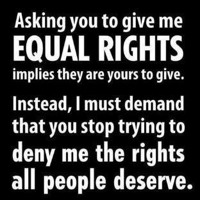
Equally clear from the three presentations on this new version in Parliament to date is that the parliamentarians don't get it. They fail to understand that rights are not given by them to a grateful and subservient people waiting like Oliver Twist with a begging bowl, saying "please Sir, may I have some more". They clearly don't get that rights belong to every single human being in Jamaica equally, and that the people acquire them by virtue of being human, not because it suits some current political agenda.
There have been several speeches made in Parliament on this issue. First by the prime minister who spent the longest part of his talk explaining that homosexuals would not be getting any rights from him or his Government! This edifying contribution was followed by one from Robert Pickersgill for the Opposition, stating emphatically that they wouldn't be voting for any Charter of Rights that wasn't married to a provision to take away from persons on death row their right not to be subjected to cruel and inhumane punishment (a necessity they said arising from the Pratt and Morgan decision of the Privy Council).
This bizarre position seems to have been abandoned by the time Portia Simpson Miller made her presentation. Unfortunately, she too seems to believe that rights are hers for the bestowing on the grateful poor. Rather than marrying the Charter of Rights to the Pratt and Morgan decision, she instead tied them to the CCJ. If the Government gives the loyal Opposition the CCJ, (something it wasn't prepared to give itself in the intervening period since the Privy Council told them what they needed to do) then they will magnanimously vote for the Charter of Rights. (And don't worry, homosexuals will not be getting any rights from the People's National Party either.)
The parliamentarians have demonstrated that they will not be providing leadership built on values of tolerance, empathy and respect. They will be following the lowest common denominator and prejudice, fearing to empower the people, calling us to our better selves and improving the lot of all in our land.
Aside from the deeply disappointing approach of the parliamentarians, the bill in parliament has a number of flaws. We urge everyone to get a copy and read it, even if the archaic legal language makes it difficult to understand, which is one of its major flaws. (Wouldn't you like to be able to read your Charter of Rights and understand what it is guaranteeing you?) This document is meant to be shaping the nation's destiny for the 21st century. JFJ doesn't believe that this bill is currently in a state that could accomplish that goal in a positive way. Let us go back to the people, and not just go with something substandard because we are tired of looking ineffectual for not passing it.
The Caribbean Court of Justice (CCJ)
The PNP has now 'married' the Charter of Rights to the CCJ, once again subjecting the rights of citizens to political bargaining. JFJ has serious objections in principle to this modus operandi of our political parties because it ignores the intrinsic value of the legislation in favour of scoring political points. It speaks to the quality of our parliamentary representation.
Having said that, we agree that both these issues affect fundamental rights of the people. In the case of the CCJ, it is the people's right to have a say in the composition and character of their final court of appeal. JFJ has a long history of advocacy on this issue.
Our position on the CCJ, which is equally applicable to the Charter of Rights, is that the public must be educated about the issue; there must be robust public debate on the issue and then there must be public consultation. Every citizen has a right to have a say in how his or her country is run. This right is even more crucial when the matters to be decided are as fundamental to democracy as the alteration of one of the three pillars of government, which are the legislature, the executive and the judiciary. Democratic 'Best Practice' requires that the people be consulted on matters of fundamental importance to them.
During the process of education and debate leading to consultation there should be time to discuss how we can strengthen the protections for the CCJ so that the terms and conditions which affect the judiciary cannot be altered by simple majority of Caricom heads of government as they alter the Treaty of Chaguaramas. And this is not a theoretical concern; it was already done when the terms and conditions of the Judicial Services commission for the CCJ was altered a short time ago.
get it right
It is critical for our democracy that we have a court that will "stand between the power of the state government to formulate and execute legislation and policy and the citizen's right to the exercise of his fundamental rights". It is equally critical that we have a comprehensive and clearly worded Charter of Rights to be interpreted and enforced by the court as it fulfils that role.
JFJ has always said that because we, the people, are fully capable of getting it right, we must get it right and the people must be consulted. We, the people, not the politicians, must be the ones to decide the future for our children and grandchildren.
Jamaicans For Justice (JFJ) is writing in hopes of bringing a human rights perspective to a number of important issues which have come to public attention in the last few weeks including the Charter of Rights and the Caribbean Court of Justice (CCJ).
JFJ is deeply disappointed in how the vital issue of enacting a new Charter of Rights for Jamaica has been handled to this point. This Charter of Rights has a long history dating back to the appointment of a Constitutional Commission in 1992. That Commission had many sittings and consultations, provided an interim report in 1993, was re-appointed in 1993 specifically to consider the "Charter of Rights and Fundamental Freedoms" and provided a final report under the Chairmanship of Dr Lloyd Barnett in February 1994.
This report was provided to a joint select committee of Parliament, where it languished for five years before a new draft bill entitled the 'Charter of Rights' was produced and a call for public submissions was published. Submissions were heard sporadically during 2002, and over the succeeding years numerous modifications have been made to the initial bill. What was tabled without much fanfare in April 2009 by Prime Minister Golding was the latest version, presumably agreed by members of a joint select committee of Parliament (i.e, 12 or 14 elected members of Parliament and Senators) for action by both Houses of Parliament.
new Charter of Rights
What has been completely missing over the last 16 years is any discussion of the proposed new Charter of Rights with the people. There have been no public meetings held across the island, no systematic public education campaign and very few opportunities for ordinary citizens to have any input on the text of the bill and the assumptions which underlie it. Given all that has changed in the last 16 years, shouldn't we challenge this fact?
Equally clear from the three presentations on this new version in Parliament to date is that the parliamentarians don't get it. They fail to understand that rights are not given by them to a grateful and subservient people waiting like Oliver Twist with a begging bowl, saying "please Sir, may I have some more". They clearly don't get that rights belong to every single human being in Jamaica equally, and that the people acquire them by virtue of being human, not because it suits some current political agenda.
There have been several speeches made in Parliament on this issue. First by the prime minister who spent the longest part of his talk explaining that homosexuals would not be getting any rights from him or his Government! This edifying contribution was followed by one from Robert Pickersgill for the Opposition, stating emphatically that they wouldn't be voting for any Charter of Rights that wasn't married to a provision to take away from persons on death row their right not to be subjected to cruel and inhumane punishment (a necessity they said arising from the Pratt and Morgan decision of the Privy Council).
This bizarre position seems to have been abandoned by the time Portia Simpson Miller made her presentation. Unfortunately, she too seems to believe that rights are hers for the bestowing on the grateful poor. Rather than marrying the Charter of Rights to the Pratt and Morgan decision, she instead tied them to the CCJ. If the Government gives the loyal Opposition the CCJ, (something it wasn't prepared to give itself in the intervening period since the Privy Council told them what they needed to do) then they will magnanimously vote for the Charter of Rights. (And don't worry, homosexuals will not be getting any rights from the People's National Party either.)
The parliamentarians have demonstrated that they will not be providing leadership built on values of tolerance, empathy and respect. They will be following the lowest common denominator and prejudice, fearing to empower the people, calling us to our better selves and improving the lot of all in our land.
Aside from the deeply disappointing approach of the parliamentarians, the bill in parliament has a number of flaws. We urge everyone to get a copy and read it, even if the archaic legal language makes it difficult to understand, which is one of its major flaws. (Wouldn't you like to be able to read your Charter of Rights and understand what it is guaranteeing you?) This document is meant to be shaping the nation's destiny for the 21st century. JFJ doesn't believe that this bill is currently in a state that could accomplish that goal in a positive way. Let us go back to the people, and not just go with something substandard because we are tired of looking ineffectual for not passing it.
The Caribbean Court of Justice (CCJ)
The PNP has now 'married' the Charter of Rights to the CCJ, once again subjecting the rights of citizens to political bargaining. JFJ has serious objections in principle to this modus operandi of our political parties because it ignores the intrinsic value of the legislation in favour of scoring political points. It speaks to the quality of our parliamentary representation.
Having said that, we agree that both these issues affect fundamental rights of the people. In the case of the CCJ, it is the people's right to have a say in the composition and character of their final court of appeal. JFJ has a long history of advocacy on this issue.
Our position on the CCJ, which is equally applicable to the Charter of Rights, is that the public must be educated about the issue; there must be robust public debate on the issue and then there must be public consultation. Every citizen has a right to have a say in how his or her country is run. This right is even more crucial when the matters to be decided are as fundamental to democracy as the alteration of one of the three pillars of government, which are the legislature, the executive and the judiciary. Democratic 'Best Practice' requires that the people be consulted on matters of fundamental importance to them.
During the process of education and debate leading to consultation there should be time to discuss how we can strengthen the protections for the CCJ so that the terms and conditions which affect the judiciary cannot be altered by simple majority of Caricom heads of government as they alter the Treaty of Chaguaramas. And this is not a theoretical concern; it was already done when the terms and conditions of the Judicial Services commission for the CCJ was altered a short time ago.
get it right
It is critical for our democracy that we have a court that will "stand between the power of the state government to formulate and execute legislation and policy and the citizen's right to the exercise of his fundamental rights". It is equally critical that we have a comprehensive and clearly worded Charter of Rights to be interpreted and enforced by the court as it fulfils that role.
JFJ has always said that because we, the people, are fully capable of getting it right, we must get it right and the people must be consulted. We, the people, not the politicians, must be the ones to decide the future for our children and grandchildren.
| Reactions: |
Subscribe to:
Posts (Atom)
What to Do .....
When Arrested and taken to a Police Station you have the right to:
a. Make a phone call: to a lawyer or relative or anyone
b. Ask to see a lawyer immediately: if you don’t have the money ask for a Duty Council
c. A Duty Council is a lawyer provided by the state
d. Talk to a lawyer before you talk to the police
e. Tell your lawyer if anyone hits you and identify who did so by name and number
f. Give no explanations excuses or stories: you can make your defense later in court based on what you and your lawyer decided
g. Ask the sub officer in charge of the station to grant bail once you are charged with an offence
h. Ask to be taken before a justice of The Peace immediately if the sub officer refuses you bail
i. Demand to be brought before a Resident Magistrate and have your lawyer ask the judge for bail
j. Ask that any property taken from you be listed and sealed in your presence
Cases of Assault:An assault is an apprehension that someone is about to hit you
The following may apply:
1) Call 119 or go to the station or the police arrives depending on the severity of the injuries
2) The report must be about the incident as it happened, once the report is admitted as evidence it becomes the basis for the trial
3) Critical evidence must be gathered as to the injuries received which may include a Doctor’s report of the injuries.
4) The description must be clearly stated; describing injuries directly and identifying them clearly, show the doctor the injuries clearly upon the visit it must be able to stand up under cross examination in court.
5) Misguided evidence threatens the credibility of the witness during a trial; avoid the questioning of the witnesses credibility, the tribunal of fact must be able to rely on the witness’s word in presenting evidence
6) The court is guided by credible evidence on which it will make it’s finding of facts
7) Bolster the credibility of a case by a report from an independent disinterested party.
a. Make a phone call: to a lawyer or relative or anyone
b. Ask to see a lawyer immediately: if you don’t have the money ask for a Duty Council
c. A Duty Council is a lawyer provided by the state
d. Talk to a lawyer before you talk to the police
e. Tell your lawyer if anyone hits you and identify who did so by name and number
f. Give no explanations excuses or stories: you can make your defense later in court based on what you and your lawyer decided
g. Ask the sub officer in charge of the station to grant bail once you are charged with an offence
h. Ask to be taken before a justice of The Peace immediately if the sub officer refuses you bail
i. Demand to be brought before a Resident Magistrate and have your lawyer ask the judge for bail
j. Ask that any property taken from you be listed and sealed in your presence
Cases of Assault:An assault is an apprehension that someone is about to hit you
The following may apply:
1) Call 119 or go to the station or the police arrives depending on the severity of the injuries
2) The report must be about the incident as it happened, once the report is admitted as evidence it becomes the basis for the trial
3) Critical evidence must be gathered as to the injuries received which may include a Doctor’s report of the injuries.
4) The description must be clearly stated; describing injuries directly and identifying them clearly, show the doctor the injuries clearly upon the visit it must be able to stand up under cross examination in court.
5) Misguided evidence threatens the credibility of the witness during a trial; avoid the questioning of the witnesses credibility, the tribunal of fact must be able to rely on the witness’s word in presenting evidence
6) The court is guided by credible evidence on which it will make it’s finding of facts
7) Bolster the credibility of a case by a report from an independent disinterested party.
Taboo...Yardies Trailer
The concept of the documentary Taboo...Yardies is to explore the perception of Jamaica as an Island that is saturated with homophobia by providing Jamaicans who are pro, con and everywhere in between this highly controversial issue. These are the voices of those who dare to speak up and out on human rights.
Popular Posts
-
Donna Tam Reports The booking of another reggae star for a show next week in California has spurred the concern of “murder music” activis...
-
The interactive map above shows averages of penis sizes around the world I doubt if its accurate but you be the judge as...
-
At another bloggers Lyme recently this time done online another sticky topic came up that of cybersex as done by persons involved in so call...
-
Ringonit.org has launched a social media blitz on the use of the Female Condom also known as FEMIDOM for anal sex, this is no...
-
Help end discrimination, celebrate Human Rights Day 2009… and beyond Here are ideas and tools that will help you develop campaigns against ...
-
Eve for Life TEENs often feel like nothing can hurt them. To many, their impression of HIV is that it only happens to certain people. In ac...
-
Writing as a fan, a DJ, Observer on the scene and just a plain mourner as we grieve from her death, Whitney Elizabeth Houston in essence ...
-
Jamaican men certainly are some of the most attractive beings to look at in their natural aesthetic sans gym activity or any needed enhancem...
-
Hello readers: I pondered if I should post this and waste time but the irony about it is that it's two dancehall DJs quarreling and the ...
-
Where did they all come from and what do they mean? Gay men and gay women. Bisexual. Transgender. ___________________________ The rai...
Atheism & Secularism may cloud the struggle for lgbt rights in Jamaica
recent discussions seem to cloud the thrust for advocacy in regards to decriminalization of buggery and privacy rights for same gender loving people
Information & Disclaimer
Not all views expressed are those of GJW
This blog contains pictures and images that may be disturbing. As we seek to highlight the plight of victims of homophobic violence here in Jamaica, the purpose of the pics is to show physical evidence of claims of said violence over the years and to bring a voice of the same victims to the world.
Many recover over time, at pains, as relocation and hiding are options in that process. Please view with care or use the Happenings section to select other posts of a different nature.
Not all persons depicted in photos are gay or lesbian and it is not intended to portray them as such, save and except for the relevance of the particular post under which they appear.
Please use the snapshot feature to preview by pointing the cursor at the item(s) of interest. Such item(s) have a small white dialogue box icon appearing to their top right hand side.
God Bless
Other Blogs I write to:
http://glbtqjamaica.blogspot.com/
Recent Homophobic Incidents CLICK HERE for related posts/labels from glbtqjamaica's blog & HERE for those I am aware of.
contact:
lgbtevent@gmail.com
glbtqjamaica@live.com
This blog contains pictures and images that may be disturbing. As we seek to highlight the plight of victims of homophobic violence here in Jamaica, the purpose of the pics is to show physical evidence of claims of said violence over the years and to bring a voice of the same victims to the world.
Many recover over time, at pains, as relocation and hiding are options in that process. Please view with care or use the Happenings section to select other posts of a different nature.
Not all persons depicted in photos are gay or lesbian and it is not intended to portray them as such, save and except for the relevance of the particular post under which they appear.
Please use the snapshot feature to preview by pointing the cursor at the item(s) of interest. Such item(s) have a small white dialogue box icon appearing to their top right hand side.
God Bless
Other Blogs I write to:
http://glbtqjamaica.blogspot.com/
Recent Homophobic Incidents CLICK HERE for related posts/labels from glbtqjamaica's blog & HERE for those I am aware of.
contact:
lgbtevent@gmail.com
glbtqjamaica@live.com
Thanks for your Donations
Hello readers,thank you for your donations via Paypal in helping to keep this blog going and related costs. Please continue to support me and my allies in this venure that has now become a full time activity. When I first started blogging in late 2007 it was just as a pass time to highlight GLBTQ issues in Jamaica under then JFLAG's blogspot page but now clearly there is a need for more forumatic activity which I want to continue to play my part.
Donations presently are only accepted via Paypal where buttons are placed at points on this and the GLBTQ's blog as well. If you wish to send donations otherwise please contact: glbtqjamaica@live.com

Activities & Plans: ongoing and future
- To continue this venture towards website development with an E-zine focus
- Work with other Non Governmental organizations old and new towards similar focus and objectives
- To find common ground on issues affecting GLBTQ and straight friendly persons in Jamaica towards tolerance and harmony
- Exposing homophobic activities and suggesting corrective solutions
- To formalise GLBTQ Jamaica's activities in the long term
- Continuing discussion on issues affecting GLBTQ people in Jamaica and elsewhere
- Welcoming, examining and implemeting suggestions and ideas from you the viewing public
- Present issues on HIV/AIDS related matters in a timely and accurate manner
- Assist where possible victims of homophobic violence and abuse financially and otherwise
- Track human rights issues in general with a view to support for ALL
Thanks again
Howie
lgbtevent@gmail.com
http://glbtqjamaica.blogspot.com/
http://glbtqjamaicalinkup.ning.com/
Peace